A painted dog sighting at Gwango
Oct 08, 2026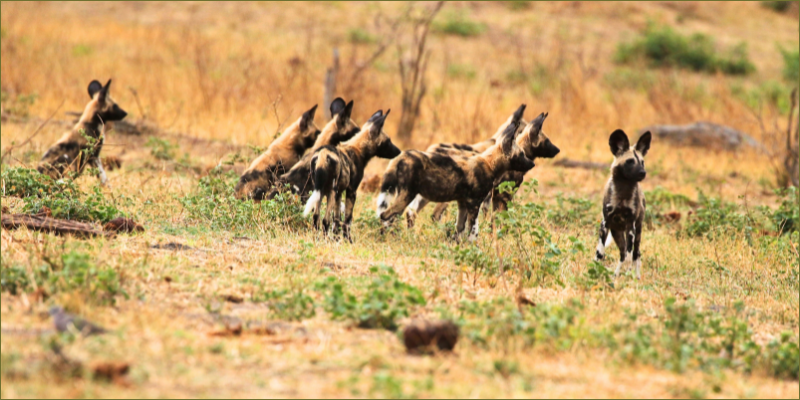
Late in September, a pack of around 20 painted dogs was spotted on the Gwango estate, causing great excitement amongst our guests and the team. Painted dogs, also known as African wild dogs, are one of Hwange’s more elusive predators, so seeing a pack this size is always something special.
From the numbers, and as later confirmed by the Painted Dog Conservation, the group we saw was the Umkhonto pack, which is known to range through the Hwange buffer zone and surrounding areas. The pack grew to 25 members late last year, but the recent monitoring updates from PDC indicate the core pack stands at 18 dogs (11 adults and 7 pups) after a large group of 10 individuals dispersed to potentially establish new packs. What we do know is that there was a good sized group passing through the area, and everyone was very happy to see them.
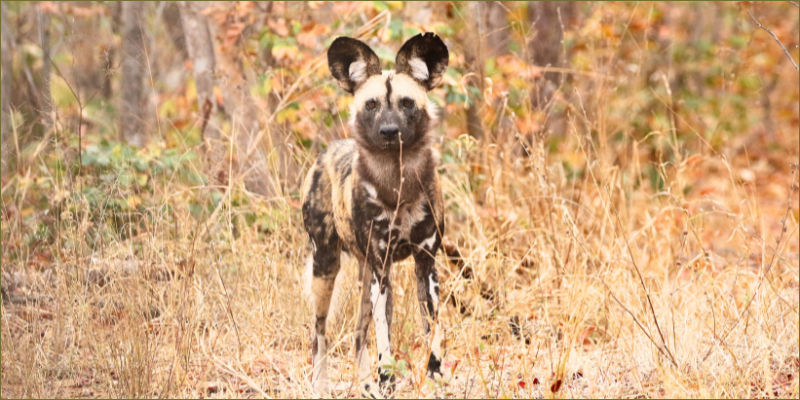
Painted dogs are highly social animals and live in packs where cooperation is essential. The adults work together to hunt, protect the pups and care for one another. The pups are looked after by the whole pack, which means that when you see a group of adults together, there are often youngsters somewhere close by. This social structure is one of the things that makes them so fascinating to watch.
The dogs usually move between Hwange National Park, buffer areas, private land and communal areas. The Umkhonto pack in particular has become well known for travelling through the Hwange buffer zone, where it faces some of the challenges that come with sharing the land with people. Roads, snares and human activity can all pose serious risks to these animals. Painted Dog Conservation has been monitoring and protecting the pack in this wider area, including through anti-poaching work and efforts to reduce the risks they face.
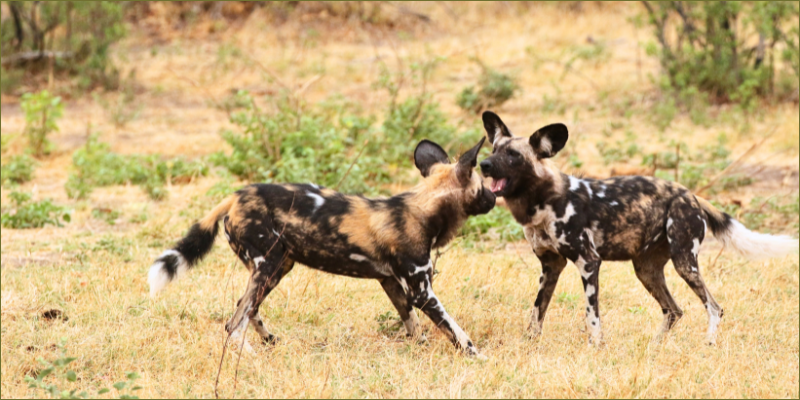
For us at Gwango, seeing them was a really special experience! Painted dogs are not always easy to spot. They can cover a lot of ground and spend much of their time travelling. Their distinctive coats are so individual, with each dog having its own completely different pattern, which is where their funny name comes from. No two have exactly the same markings and that’s what makes it possible for experienced trackers and conservation teams to recognise individual dogs.
The September sighting was particularly significant because of the number of animals together. This was a substantial group, and with pups among them, it was an encouraging sight. It lets us know that the pack is continuing to reproduce and that a new generation of painted dogs is growing up in the area. That gives us hope that these remarkable animals will continue to be part of the Hwange landscape for many years to come. We will be keeping an eye out for them and hoping they continue to range through the Gwango area and the wider Hwange landscape.